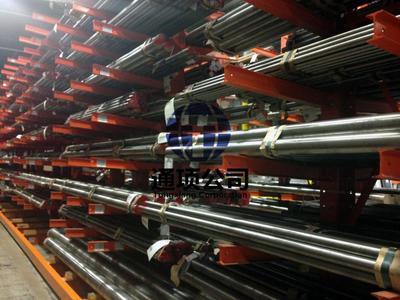
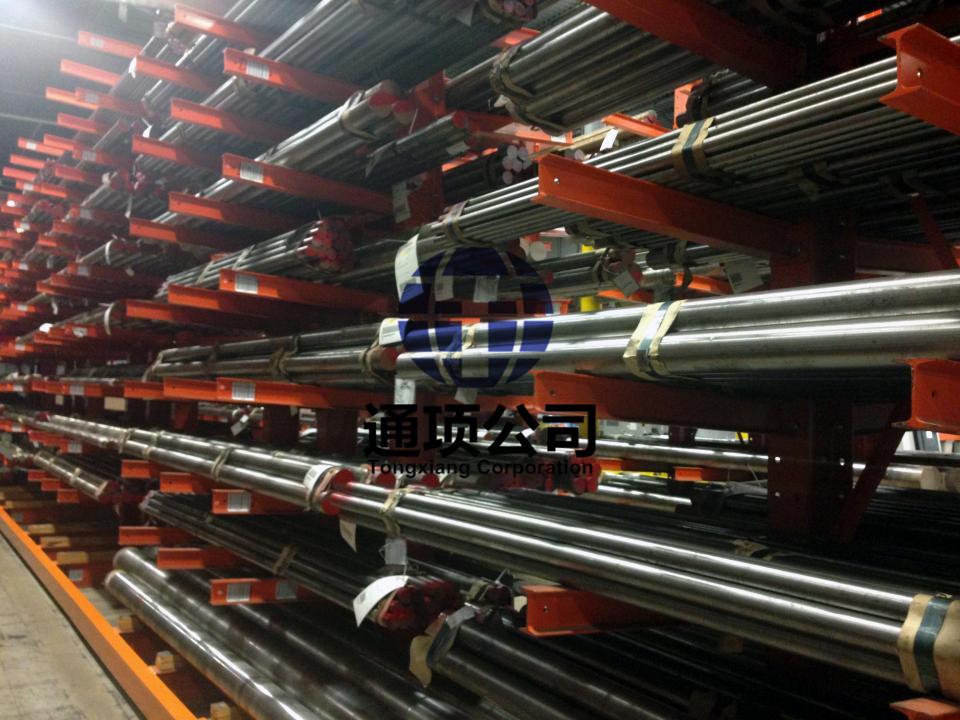
Carpenter Chrome Core? 18-FM Solenoid Quality stainless is a soft magnetic ferritic material designed for operation in more corrosive environments than tolerated by 18% Cr-Fe Type 430 stainless. This new material has corrosion resistance superior to that of Type 430FR Solenoid Quality stainless with generally similar magnetic properties.
Chrome Core 18-FM Solenoid Quality stainless is stabilized with columbium to provide improved corrosion resistance with optimum machinability. The alloy balance also provides resistivity similar to that of Type 430FR Solenoid Quality stainless. High resistivity is beneficial in applications involving AC excitation due to the suppression of eddy current losses.
Chrome Core 18-FM Solenoid Quality stainless is available in the magnetically soft condition, requiring only machining for production of solenoid parts. This alloy may be used as machined if tooling and coolants are not laden with free iron from machining carbon steel. Users who perform their own heat treatment may purchase material which has not been treated at Carpenter.
Chrome Core 18-FM Solenoid Quality stainless provides the highest level of corrosion resistance of the Carpenter solenoid quality materials. It has resistance superior to that of Type 430FR Solenoid Quality stainless and is a candidate for service in corrosive aqueous environments and mild chemicals.
The improvement over Type 430FR Solenoid Quality stainless was demonstrated by critical crevice corrosion tests in 5% FeCl3 + 1% NaN03. Crevice specimens were exposed for 24 hours at successively higher temperatures until crevice attack was noted. Type 430FR Solenoid Quality stainless was attacked at 41°F (5°C), while Chrome Core 18-FM Solenoid Quality stainless typically withstood attack up to 77°F (25°C). This test was designed to demonstrate material differences and was more severe than many service environments.
Optimum corrosion resistance has been obtained without passivation, provided surfaces are free of scale and foreign particles. If contamination with carbon steel particles occurs during machining, they may be removed by passivating in 10% to 20% citric acid at up to 100°F (38°C) followed by appropriate rinsing and neutralization procedures. Contact Carpenter for details.
Important Note:The following 4-level rating scale is intended for comparative purposes only. Corrosion testing is recommended; factors which affect corrosion resistance include temperature, concentration, pH, impurities, aeration, velocity, crevices, deposits, metallurgical condition, stress, surface finish and dissimilar metal contact.
This material is normally supplied in the stress relieved condition to provide optimum magnetic properties. Annealing may be performed at 1650/1830°F (900/1000°C). Contact Carpenter for additional information on the effects of annealing and processing. The alloy cannot be thermally hardened. The hardness can be increased moderately by cold work, but coercivity will also be increased.
The alloy should be heated uniformly to 1950°F (1065°C) for hot working. Soaking at the forging temperature will produce grain growth.
Cold Working
Chrome Core 18-FM Solenoid Quality stainless will withstand moderate cold work, but is not recommended for severe cold upsetting operations. This material is designed for magnetic components that are machined to shape.
Machinability
Chrome Core 18-FM Solenoid Quality stainless has demonstrated excellent machinability in triplicateautomatic screw machine tests.
This material produced an average of 426 parts before tool wear allowed 0.003" part growth, while Alloy 1802 averaged only 260 parts with the same increase in part size. Type 430FR Solenoid Quality stainless was slightly superior to the Alloy 1802, with an average of 300 parts machined with the same test criterion.
Weldability
This material has been welded in thin sections, but care is required because of the high sulfur content. When welding is necessary, low heat input should be used.